By Ion Olaru, Certified GNM Clinician
As long as I can remember, I wondered why we get sick, what’s the meaning behind it, what’s the purpose, who’s punishing us to become sick?
I went onto the path of bioenergotherapy, a way of healing the organ’s energetic structure so the organ can come back to the original structure and function. I also explored natural remedies, studied the New Thought movement and all the “positive thinking” currents… yet nothing worked in the case of cancer and other cancer equivalent diseases.
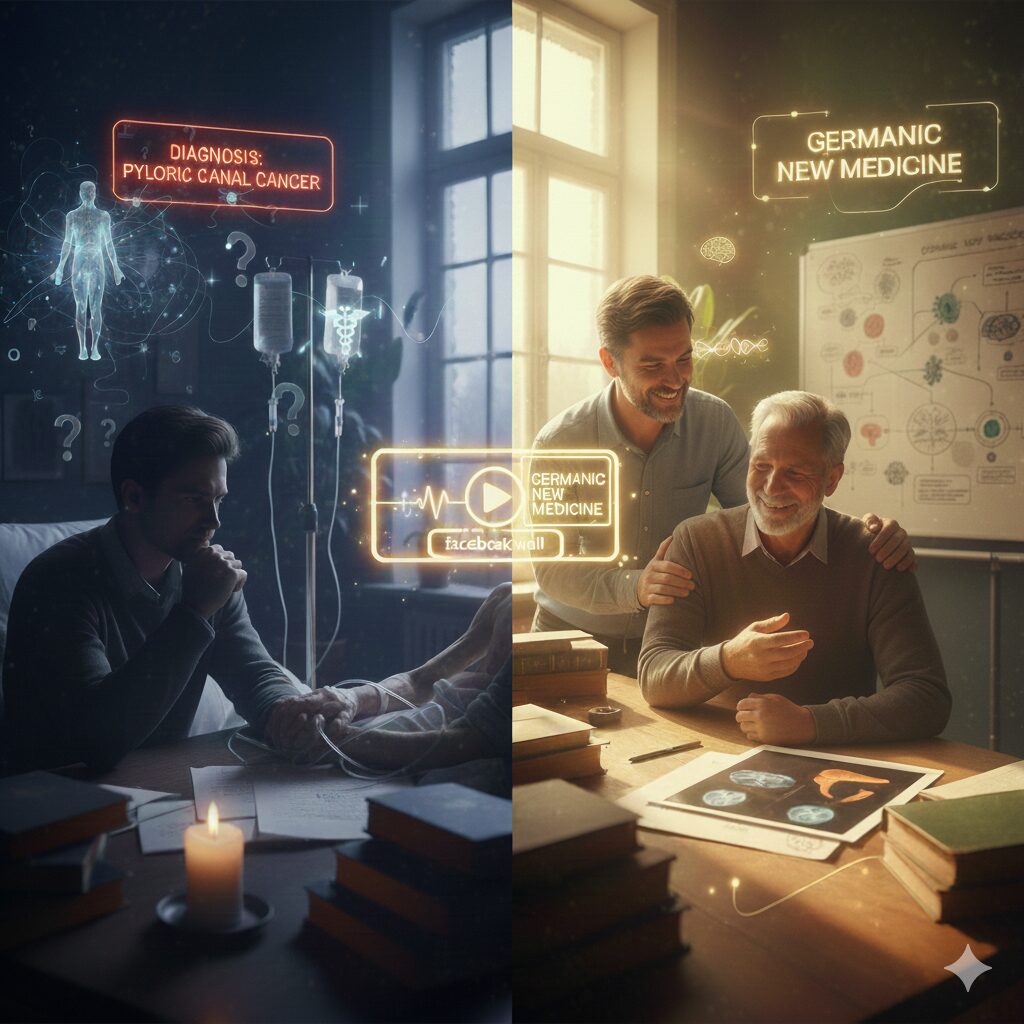
Then one day, in 2013, when Facebook wall brought in front of my eyes an article about a medicine capable of explaining the causes and providing the way out of the sickness. I was redirected to a Youtube documentary and I didn’t blink during those 4 hours, I was soaking up every word… couldn’t believe my eyes that this doctor really found the magic solution… What really hooked me was his accuracy and sharp logic… I was absolutely dazzled by the complexity of this Divine Knowledge.
One of the most meaningful experiences that deepened my trust in GNM was the one involving my father. As long as I could remember, he suffered from recurrent gastric ulcer crises—twice a year, every spring and autumn. But one year, as spring began, he suddenly developed acute pancreatitis. Because the symptoms appeared at the same time as usual, he initially believed it was another ulcer episode, but this time it went on and on…
His relationship with my mother had always been tense, and a particularly shocking event between them, triggered a biological special program (SBP) in him. The pain in the epigastric area became increasingly intense and persisted for months. Since he experienced daily bouts of vomiting, he could no longer eat normally, which led to severe weight loss, nearly progressing to cachexia.
At first, I admitted him to a hospital specializing in gastroenterology. After a series of tests, contrary to his belief that he was facing another ulcer crisis, the diagnosis was pancreatitis. I personally went to speak with the head of the department to better understand what could have caused this condition and to learn about their medical hypothesis.
The answer was short and dismissive: “It’s from drinking.” But my father was not an alcoholic—he drank very little, never got drunk, and certainly didn’t abuse alcohol. I knew people who drank heavily and had a perfectly healthy pancreas. It was clear to me that they had no real understanding of the underlying cause, which I could accept, knowing how resistant most physicians are to the GNM perspective.
At the time, I lived in a different part of the city, but when I saw the state he was in, I decided to move back in with my parents and take care of him. In the following period, I worked to help him resolve his internal conflict. However, this particular healing phase also comes with pain, especially which caused his condition to deteriorate further.
At that point, I decided to have him admitted to another hospital where he could receive parenteral nutrition, proper monitoring, and supportive care to regain his strength. Upon admission, the head physician pressed on his abdomen with an expression of disgust and coldly declared: “Pyloric canal cancer.”
During that time, his upper abdominal cavity was inflamed and contained fluid, however there was no ascites. I carefully observed this phenomenon and communicated with him constantly to prevent a new conflict—one of feeling attacked in the abdomen. An endoscopy revealed fluid collected in the stomach due to undigested food, and the typical peristaltic movements of the gastric musculature were absent due to the body’s lack of energy. The fluid was drained, and the endoscope was advanced as far as the second segment of the duodenum (D2). They found several scars along the small curvature of the stomach near the pylorus, but nothing that could obstruct the passage of food. Despite this, they decided that once his condition will improve, they would perform stomach surgery—something I strongly opposed.
Throughout this time, I was guided by Mrs. Ilsedora Laker, whose advice helped me keep my father balanced during the weeks of hospitalization. I was constantly present and involved in every aspect of his care—monitoring medications, deciding what was necessary, checking his vital parameters, liaising with medical staff, and providing emotional support.
As the date of the planned operation approached, and the doctors still refused my request to perform an MRI to investigate the pancreas, I began looking for another hospital with a more open-minded physician. Eventually, I found a professor and department head who agreed to recommend an MRI. The only way to make it happen was to “sneak” my father out of the hospital for a few hours, perform the MRI, and bring him back.
As expected, the MRI confirmed pancreatitis—a diagnosis I already suspected. But my goal was to buy time for him to be properly nourished and supported. When the head physician returned and learned what I had done, he told me my actions justified immediate discharge, as I had broken hospital protocol.
He also said they would no longer operate. I handed him the MRI results… he was stunned. I reminded him that if it truly had been pyloric cancer, the pylorus would have been completely obstructed, and they wouldn’t have been able to reach the duodenum with the endoscope. His attitude changed immediately, and he agreed to keep my father hospitalized until a bed became available in the new hospital.
Two days later, we transferred him. My father, having full trust in me and in GNM (even though he didn’t fully grasp the concept), agreed to be admitted. To everyone’s surprise—including our relatives who supported the option to go for the surgery—his pain gradually disappeared, and he began eating again. I was cautious regarding an “abandonment conflict”, since access to the new hospital was more restricted for family member.
However, one weekend when I couldn’t visit him and asked my brother to go instead, he didn’t go. On Monday, when I finally managed to enter, my father was disoriented. He said to me: “You abandoned me and left me here.” I immediately realized the abandonment conflict had been triggered, exactly as I had anticipated—but I didn’t yet know that the confusion was the effect of a constellation involving the kidney collecting tubules on opposite relays.
The situation became more complicated after I brought him home again, where the original stress was still present and his recovery far from being complete. There were days—many of them—when I personally inserted the IV line and administered his infusions, which was a first for me.
A few weeks later, I noticed fluid accumulation in the legs, and ordered blood and urine tests. The results showed significant protein loss. After consulting again with Mrs. Laker, we administered albumin to compensate for the loss. His digestive system began functioning normally again, but his mind never fully returned to clarity…
If I had had the knowledge, understanding, and experience that I possess now, everything would have unfolded differently.
The following year, I enrolled in the Germanic New Medicine Institute and began this extraordinary journey. I was hungry, eager to spend most of my spare time to study GNM and anatomy & physiology in parallel. I started telling people about this Sacred Medicine, I even give some introductory courses.
But the real deal was when I took the intermediate exams and went to Certified Clinician Program… it was like this part answered to all my questions, it filled the gaps, the missing links were there, especially during the Practicum. The magic of GNM comes to play when becoming conscious of our conflicts and tracks, will switch to less symptoms and repair phase… further, we can become conscious of our resistance to events, of our inability to accept reality… in this way less and less situations will become a new conflict or a track.
I am deeply grateful to Mrs. Ilsedora Laker, for she made possible this access to the extraordinary body of knowledge left to us by Dr. Hamer, and for enabling this way of learning — not only theoretically, but also through practical experience. She continues to be the one who offers us guidance and support on this path, especially when we face the more challenging situations in our clinician careers.